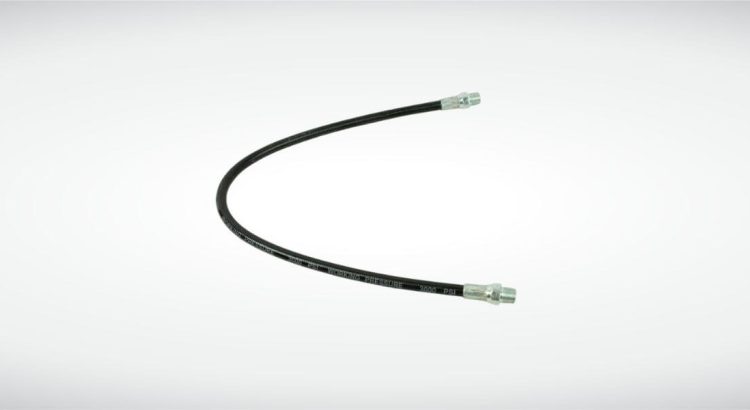
A flexible hose is one of the most practical accessories a workshop can have, but it is also one of the most overlooked until it fails.
In short, it allows grease, oil or other fluids to be directed to hard-to-reach points without having to remove components or improvise solutions. It is simple, but it can make a real difference to the quality and speed of every job.
In this article, find out what a flexible hose is, what it is used for, what types are available and how to choose the right model for your workshop.
What Is a Flexible Hose?
A flexible hose is a fluid delivery accessory that adapts to the route required to reach the lubrication or application point.
Unlike rigid hoses, a flexible hose can bend and be positioned without breaking, while maintaining fluid flow even at difficult angles.
In workshop environments, these hoses are mainly used as extensions for grease guns and oil cans. They are compatible with different types of equipment and can be replaced independently, meaning there is no need to replace the entire tool.
What Is a Flexible Hose Used For?
The main function of a flexible hose is to deliver fluids precisely to hard-to-reach points, such as bearings, pivots, CV joints, grease fittings, bushes and other lubrication points that are recessed or obstructed by other components.
Without a suitable flexible hose, applying grease or oil to these points may require removing components, improvising with unsuitable extensions or accepting incomplete lubrication. With the right hose, the job can be completed in seconds without disassembly.
What Types Of Flexible Hoses Are Available?
Flexible hoses for workshop use are mainly differentiated by their material and application:
PVC Flexible Hose (Plastic)
Lightweight, affordable and suitable for oils and low-viscosity lubricants, this is the most common type for oil cans and light maintenance applications.
It is not suitable for working at high pressures or extreme temperatures.
Flexible Aluminium Hose
More resistant than PVC, a flexible aluminium hose can withstand moderate pressures and higher temperatures.
It retains its shape after being bent, which is useful when a fixed and repeatable angle is required during application. It is suitable for manual grease guns.
Stainless Steel
Stainless steel flexible hoses are the most robust of the three options, as they resist corrosion, high temperatures and higher pressures.
This type of hose is ideal for demanding applications, such as pneumatic or hydraulic grease guns, where it is exposed to frequent pressure cycles.

Where Are Flexible Hoses Used?
Flexible hoses can be used for any task involving the delivery of a fluid to a specific point, such as:
- Grease guns: the flexible hose delivers grease from the gun to the grease coupler and lubrication point;
- Oil cans: allows the oil flow to be directed precisely, particularly to recessed or angled points;
- Machinery lubrication systems: in lathes, milling machines and industrial equipment, flexible hoses form part of continuous lubrication circuits;
- Application of special fluids: brake fluid, power steering fluid or additives, whenever direct access to the application point is difficult.
What Is The Best Material For a Flexible Hose?
The choice of material depends on the type of pump, the fluid and the frequency of use.
For general workshop use, flexible aluminium is the most balanced option, as it is more durable than PVC and more affordable than stainless steel.
Use the table below as a guide when making your choice.
| Material | Pressure Rating | Maximum Temperature | Ideal For |
| PVC | Low | Up to 60°C | Oil cans and light oils |
| Aluminium | Moderate | Up to 120°C | Manual grease guns |
| Stainless Steel | High | Up to 200°C | Heavy-duty pneumatic grease guns |
What Are The Advantages Of a Flexible Hose?
In addition to making application faster, using a flexible hose in a workshop provides:
- Access to difficult-to-reach points: it bends and can be positioned without restricting flow, reaching areas that a rigid hose cannot;
- Precision: directs the fluid exactly where it is needed, reducing waste;
- Easy replacement: when the hose wears out, only the hose needs to be replaced rather than the entire grease gun or oil can;
- Wide compatibility: most hoses use standard threads or fittings, making them compatible with various brands and models.
What Are The Common Problems With Flexible Hoses?
Despite its advantages, a flexible hose has some limitations:
- Limited service life: PVC and aluminium hoses wear with use, particularly in areas that are repeatedly bent;
- Unsuitable for very high pressures: PVC and aluminium hoses are not suitable for high-pressure pneumatic grease guns, which require stainless steel hoses;
- Blockages caused by hardened grease: if the grease is not purged after use, it can harden inside the hose and cause a blockage;
- Model-specific threading: not all hoses fit all grease guns or pumps, so compatibility must be confirmed before purchasing this accessory.

How To Choose a Flexible Hose?
There are three criteria that determine the right choice:
1. Compatibility With The Grease Gun Or Oil Can
Check the diameter and type of connection (internal/external thread or quick coupling), as an incompatible thread may prevent the hose from fitting correctly or, if it does fit, may result in a poor seal and leaks.
2. Material Suitable For The Fluid And Pressure
For manual grease guns, aluminium is the ideal choice. For oil cans, PVC is suitable. For pneumatic grease guns, choose stainless steel.
3. Suitable Length For The Job
A hose that is too short will not reach the required point, while one that is too long can be difficult to manoeuvre in confined spaces.
Choose a length that allows you to work comfortably.
When Should a Flexible Hose Be Replaced?
To ensure proper operation, the hose should be replaced when it:
- Has cracks, splits or visible deformation in the outer covering;
- Leaks fluid anywhere along its length;
- Is blocked and cannot be cleared by cleaning;
- Has a worn connection thread that no longer seals correctly;
- Is difficult to bend or breaks when being positioned, as this indicates that the material has become weakened.
How Long Does a Flexible Hose Last?
There is no fixed service life, as everything depends on the material, frequency of use and maintenance.
Under normal workshop conditions:
- PVC: 1 to 3 years, depending on the number of use cycles and exposure to heat;
- Aluminium: 3 to 5 years, provided it is not repeatedly bent at the same point;
- Stainless steel: can last 10 years or more with proper maintenance.
Which Flexible Hose Models Are Available In The Kroftools Catalogue?
To improve the productivity of your automotive workshop, it is essential to invest in quality equipment and accessories.
KROFtools offers flexible hoses as accessories for its grease guns and oil cans.
The models below are compatible with the respective equipment in the range.
450mm Grease Gun Flexible Hose
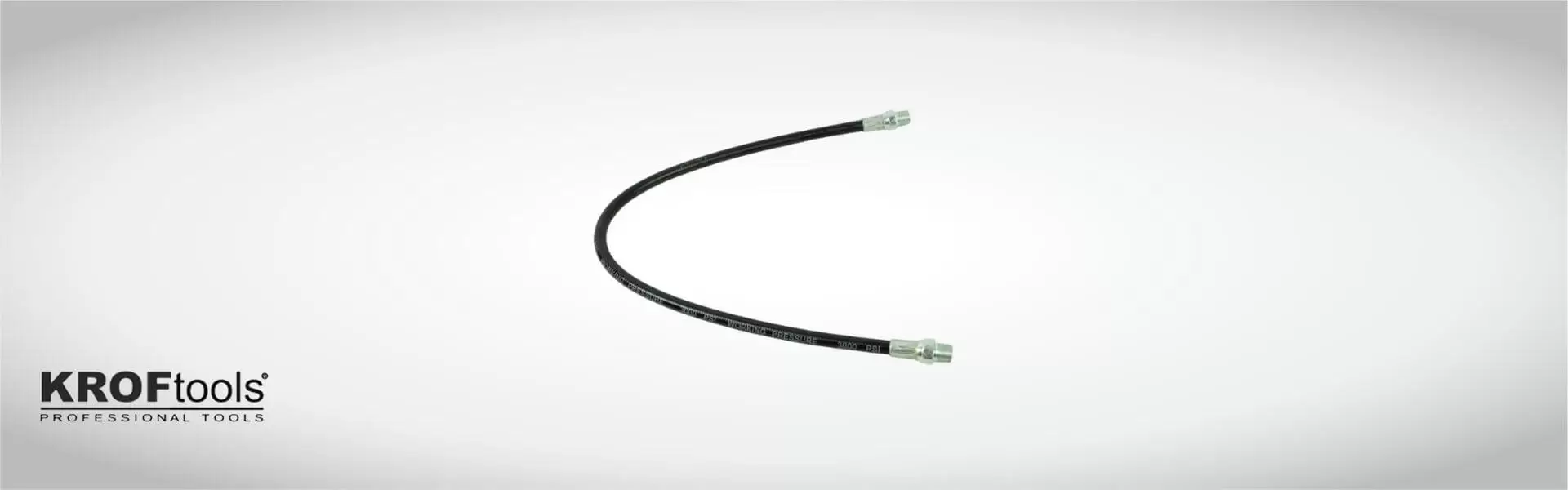
This flexible hose for KROFtools grease guns is designed to withstand the pressures typically generated by a manual grease gun, with a standard fitting that ensures a secure, leak-free connection.
Click on the image for more information about the 450mm Grease Gun Flexible Hose (ref. 3585).
300mm Grease Gun Flexible Hose
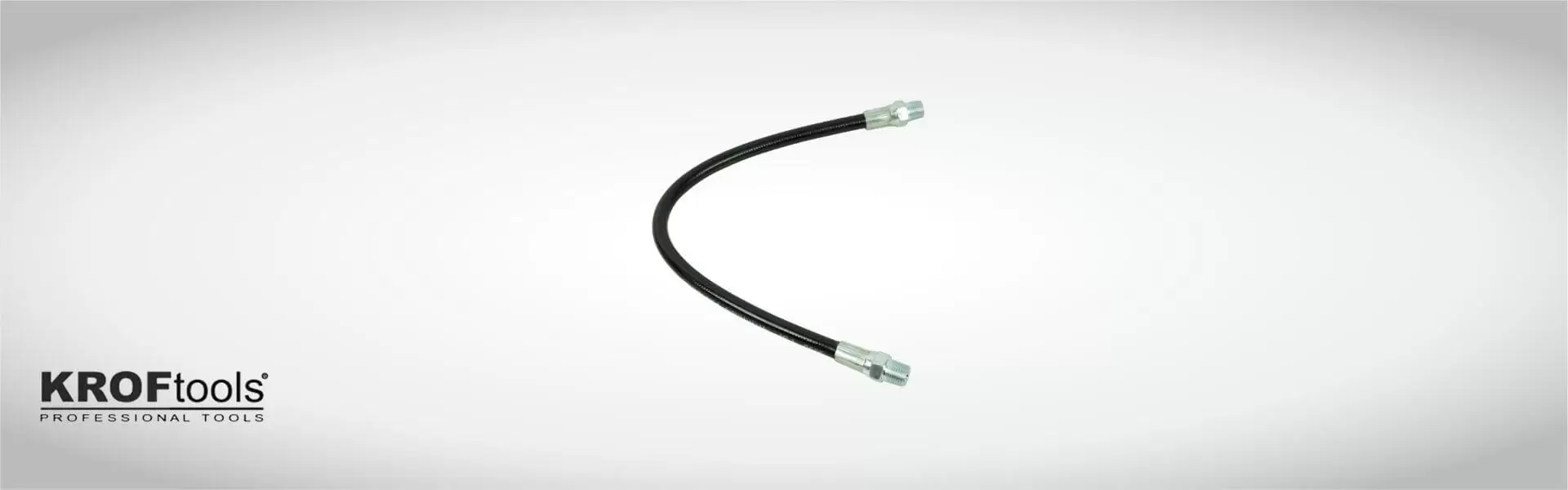
This hose is suitable for pressures of up to 3,000 PSI. It features a 1/8″ (NPT) threaded connection and fits most manual grease guns.
Click on the image for more information about the 300mm Grease Gun Flexible Hose (ref. 3586).
Flexible Spout 5″
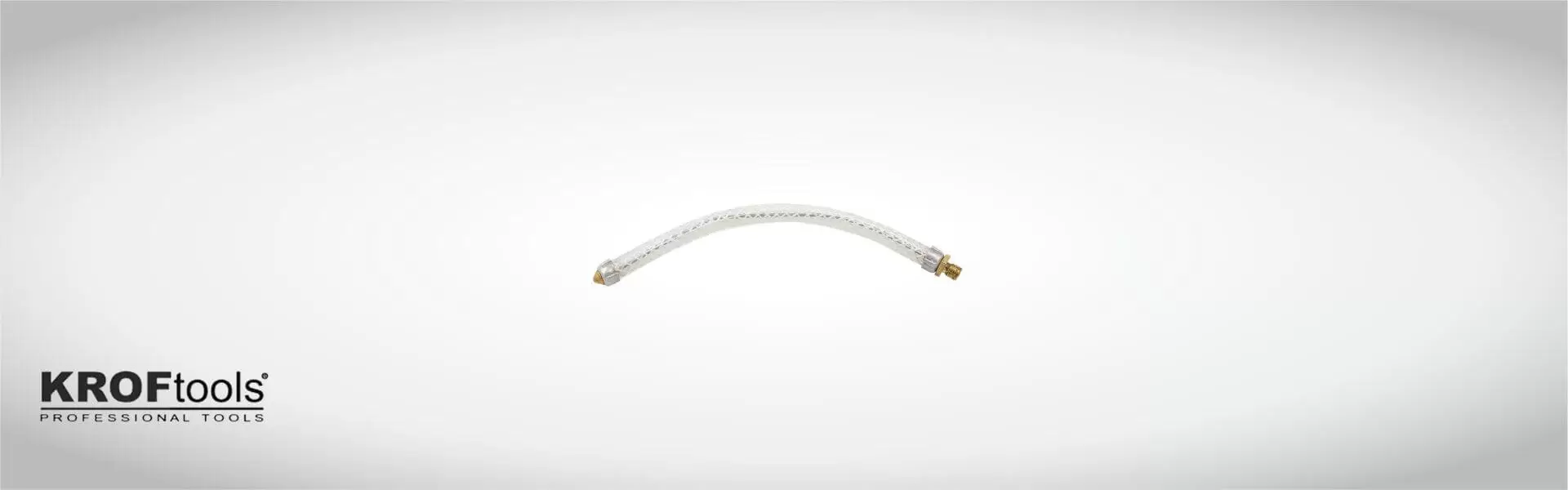
This hose is compatible with the 1/2″ 250cc Oil Can (Ref. 3212).
Click on the image for more information about the Flexible Spout 5″ (ref. 3212T).
6″ Flexible Hose
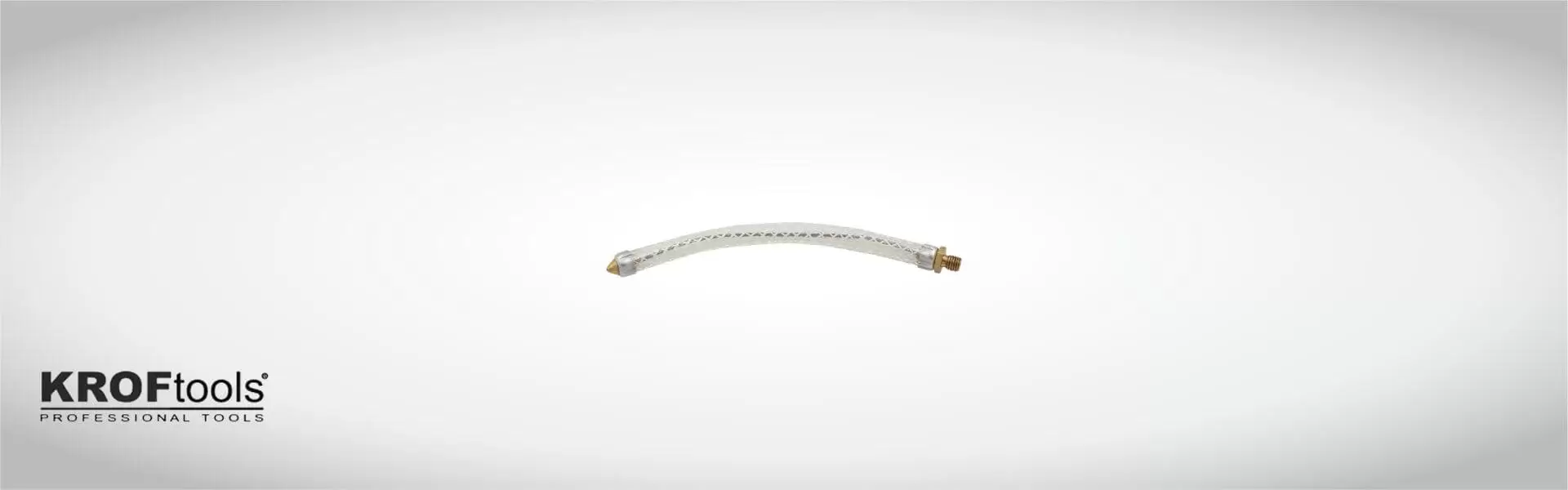
This hose is compatible with the 1/4″ 125cc Oil Can (ref. 3214).
Click on the image for more information about the Flexible Spout 6″ (ref. 3214T).
How Much Does a Flexible Hose Cost?
The price of a flexible hose varies depending on the material, length and compatibility with the equipment.
As a general rule, the price of this accessory can range from tens to hundreds of euros.
Where Can You Buy a Flexible Hose For Your Workshop?
The models mentioned above are available from authorised KROFtools dealers.
Looking to learn more about workshop tools and equipment? Follow us on Facebook and keep up with all the content we share every day.

