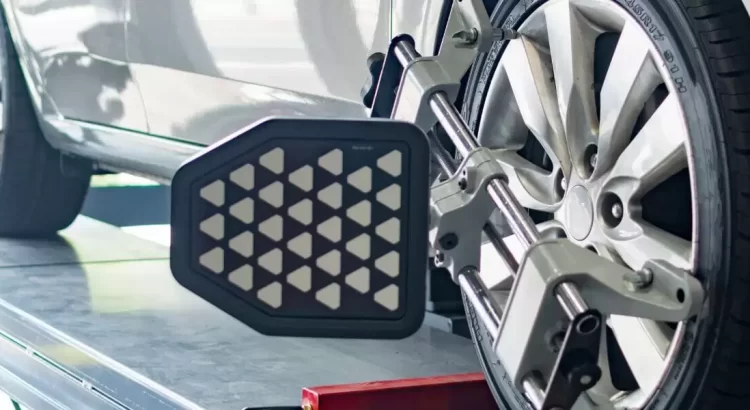
Wheel alignment is one of the most important maintenance procedures for ensuring vehicle stability and correct handling. When the wheels are misaligned, tyres wear unevenly, fuel consumption increases and the vehicle becomes less safe. The problem is that the warning signs appear gradually, and many drivers fail to recognise them in time.
In this article, discover what wheel alignment is, when it should be carried out, how it works, the warning signs to look out for and which equipment is used in professional workshops.
What Is Wheel Alignment?
Wheel alignment is a procedure designed to correctly position the wheels, both in terms of their vertical angle and toe alignment.
This process involves precise technical parameters (camber, toe and caster), which are measured and adjusted using specialised workshop equipment, according to the manufacturer’s specifications and the tyres’ requirements.
How Does It Work?
Wheel alignment starts by positioning the vehicle on an alignment system, where sensors or cameras are fitted to the wheels.
This equipment measures the position and angles of the wheels and compares the results with the values recommended by the manufacturer.
If any deviations are detected, the mechanic makes the necessary adjustments to the steering system and, where applicable, the suspension, to ensure the wheels are correctly aligned.
What Is The Difference Between Wheel Alignment And Wheel Balancing?
These two procedures are often confused, but they are different.
The comparison table below explains what each one does.
| Wheel Alignment | Wheel Balancing | |
| What does it correct? | Wheel angles in relation to the chassis and the road surface | Mass distribution in each wheel |
| Main symptom | Vehicle pulls to one side and/or uneven tyre wear | Steering wheel vibration at certain speeds |
| Equipment | Wheel alignment computer + lift | Wheel balancing machine |
| When should it be done? | Annually, every 20,000 km or whenever problems arise | When fitting new tyres or when vibrations occur |
What Are The Main Angles?
Wheel alignment takes three main angles into account, all of which influence vehicle stability, steering behaviour and tyre wear:
1. Camber
This is the angle of the wheel when viewed from the front.
If the wheel tilts too far outwards, the tyre may wear more on the outer edge. If it tilts too far inwards, wear may be greater on the inner edge.
2. Toe
This indicates whether the wheels on the same axle point slightly inwards or outwards when viewed from above.
When this angle is incorrectly adjusted, tyres may wear out faster and rolling resistance may increase, which can also affect fuel consumption.
3. Caster
This is the angle of the steering axis when viewed from the side.
This angle influences the vehicle’s straight-line stability and the steering wheel’s ability to return to the centre position after a turn.
What Causes Wheel Misalignment?
Wheel alignment deteriorates through normal vehicle use. The most common causes include:
- Driving over potholes, kerbs or speed bumps at excessive speed;
- Accidents or impacts, even at low speeds;
- Replacing suspension or steering components without subsequently realigning the wheels;
- Fitting new tyres without checking the wheel alignment.
How Can You Tell If Your Wheels Are Misaligned?
Run your hand across the tyre tread, from the outer edge to the inner edge.
If you notice an uneven surface, the wheel alignment may need to be checked.
How Do I Know If My Vehicle Needs An Alignment?
The main signs that indicate the need for wheel alignment include:
- The steering wheel is not centred when driving straight;
- The vehicle pulls to one side;
- Vibration in the front wheels;
- Increased fuel consumption;
- Excessive and uneven tyre wear;
- The steering wheel does not return to the centre position when you release it;
- Poor braking system performance (vehicle swaying or pulling during braking).
How Long Can I Go Without Getting An Alignment?
As a general rule, wheel alignment is recommended once a year or every 20,000 km.
You should also have the alignment checked whenever you:
- Fit new tyres;
- Replace suspension or steering components;
- Have an impact or collision, even a minor one.

Why Is Wheel Alignment Important?
Wheel alignment is an important part of preventive vehicle maintenance, as it contributes to safer driving and helps extend tyre life.
When the wheels are misaligned, tyres may wear unevenly, and the vehicle can lose stability and become more difficult to control, especially in situations requiring quick manoeuvres.
Cost is another important factor. Correcting misalignment promptly can prevent premature tyre replacement and, consequently, unnecessary expenses.
What Are The Benefits Of Wheel Alignment?
In short, wheel alignment helps you to:
- Extend tyre life;
- Improve safety through greater vehicle stability;
- Save fuel, as correctly aligned wheels help minimise rolling resistance;
- Improve vehicle performance, as road grip becomes more effective and steering feels lighter and easier to control;
- Reduce preventive maintenance costs by extending the service life of steering and suspension components.
How Is Wheel Alignment Performed?
Wheel alignment should be carried out at a workshop, as it requires specialised equipment to measure and correct wheel angles accurately.
The process is relatively straightforward and involves five steps:
- Vehicle preparation: the car is positioned on a dedicated wheel alignment system;
- Sensor installation: sensors or measuring targets are fitted to the wheels;
- Angle check: the equipment measures the wheel positions and compares the results with the values specified by the manufacturer;
- Alignment adjustment: the mechanic makes the necessary corrections to the adjustable steering and suspension components;
- Result confirmation: a new measurement is taken to check that the angles are within the recommended values.
Finally, the mechanic may carry out a road test to confirm that the vehicle handles correctly.
How Long Does a Full Alignment Take?
The wheel alignment procedure for each axle, front and rear, takes approximately 30 minutes. However, the time required may vary depending on the extent of the problem.
How Much Does a Wheel Alignment Cost?
The cost of wheel alignment depends on the vehicle model, the workshop and the adjustments required.
Prices vary across Europe, generally ranging from a few dozen euros, although some services may cost more. Always check the applicable prices and service conditions in your country.
Before proceeding, confirm what is included in the quote and whether the steering wheel position will also need to be corrected.

Which Vehicle Lifts Are Used For Wheel Alignment?
Wheel alignment requires a specific type of vehicle lift, different from a conventional lift.
The KROFtools catalogue includes dedicated lifts for wheel alignment:
1. Double Scissor Lifts with LED Lighting
The available double scissor lifts are electro-hydraulic pieces of equipment that allow vehicles to be raised safely and steadily. They feature integrated LED lighting and a hydraulic synchronisation system that keeps the platforms level.
The secondary platform can be adjusted in length, allowing the equipment to accommodate vehicles with different wheelbases.
Two models are available:
- 3,5ton Double Scissor Lift For Alignment W/ Led (ref. 9824);
- 5,5ton Double Scissor Lift For Alignment W/ Led (ref. 9822).
Both models include a safety system with two mechanical locking devices and low-voltage controls (24 V), making them ideal for indoor installation.
2. Four-Post Wheel Alignment Lifts
Four-post lifts allow vehicles to be raised, providing easier access to suspension and steering components during wheel alignment.
Two models are available in the catalogue:
- 4.5t Four Columns Lift 4.65m For Alignment (ref. 9853);
- 5t Four Columns Lift 5.19m For Alignment (ref. 9854).
3. Low-Profile Double Scissor Lifts with LED Lighting
Low-profile double scissor lifts are suitable for vehicles with low ground clearance, as they make it easier to position the vehicle on the platforms.
In addition, the scissor structure makes better use of workshop space and keeps the working area more accessible.
Three models are available in the KROFtools catalogue:
- 3,5t Low Profile Double Scissor Lift Alignment W/Led (ref. 9832);
- 4,5t Low Profile Scissor Lift For Alignment W/ Led (ref. 9833);
- 5,5t Low Profile Double Scissor Lift Alignment W/Led (ref. 9823).
How To Choose a Wheel Alignment Lift?
To choose the most suitable lift for your workshop, consider three factors:
- Lifting capacity: 3.5-tonne models are sufficient for many passenger cars and SUVs. For heavier vehicles, choose a capacity of 5 tonnes or more, depending on the vehicle’s weight;
- Vehicle type: for lowered vehicles or those with low ground clearance, choose low-profile lifts;
- Workshop space: scissor lifts may take up less space, while four-post lifts generally require a larger area.
Also check that the lift is compatible with the wheel alignment equipment used in your workshop.
Where To Buy Wheel Alignment Equipment?
You can purchase the lifts available in the KROFtools catalogue through an authorised dealer.
Looking to learn more about the automotive world? Follow us on Facebook and keep up with all the content we share every day.

