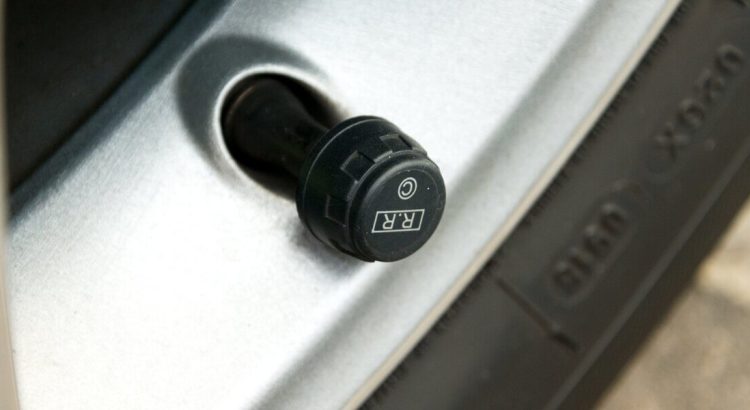
The TPMS (Tyre Pressure Monitoring System) sensor monitors tyre pressure in real time and alerts the driver whenever a tyre has an incorrect pressure.
Since November 2014, TPMS has been mandatory in all new passenger cars sold in the European Union. This system contributes to road safety by alerting the driver when it detects a loss of tyre pressure.
In this article, discover how the TPMS sensor works, what to do when the warning light comes on and how to replace it when necessary.
What Is a TPMS Sensor?
The TPMS (Tyre Pressure Monitoring System) is an electronic vehicle system that monitors the air pressure inside the tyres in real time and alerts the driver whenever it detects an incorrect pressure.
Depending on the type of system, the sensor may also measure the air temperature inside the tyre and transmit this information to the ECU.
In a direct TPMS system, a sensor is installed in each vehicle wheel to measure the air pressure inside the tyre. When the pressure drops below a predefined threshold, the sensor sends a warning signal to the instrument panel.
What Is The Purpose Of a Tyre Pressure Sensor?
The tyre pressure sensor ensures that the driver always travels with the tyres at the correct pressure.
Incorrect tyre pressure, whether too high or too low, can contribute to:
- Increased risk of tyre blowouts, especially at high speeds;
- Uneven and premature tread wear;
- Increased fuel consumption due to greater rolling resistance;
- Deterioration of vehicle handling (braking, grip and cornering stability).
How Does Tyre Pressure Monitoring Work?
The TPMS monitors tyre pressure and alerts the driver when it detects a significant loss of pressure.
Depending on the type of system, this monitoring can be carried out using sensors installed in the wheels or by analysing tyre rotation data.
When an anomaly is detected, a warning light illuminates on the instrument panel, usually represented by a tyre with an exclamation mark.
What Is The Difference Between Direct And Indirect TPMS?
The main difference between direct and indirect TPMS systems is how they detect pressure loss.
Direct TPMS uses sensors to measure the actual tyre pressure, while indirect TPMS relies on data from the wheel speed sensors to identify possible changes.
Discover the main differences in the comparison table below.
| Direct TPMS | Indirect TPMS | |
| How does it work? | Physical sensor in each wheel | Uses ABS sensors to compare rotational speeds |
| Accuracy? | High, as it measures the actual pressure of each tyre | Medium, as it detects indirect differences |
| Identifies the tyre? | Yes | No |
| Replacement cost? | High | Low |
| Does it require a reset? | Yes, after changing tyres or wheels | Yes, after calibration |
In Europe, most vehicles use direct TPMS, which provides greater accuracy and more information to the driver.
Where Is The TPMS Sensor Located In The Tyre?
In direct systems, the TPMS sensor is attached to the tyre valve, inside the wheel rim.
As it is not visible from the outside, the tyre must be removed to access the sensor.

What Are The Advantages Of a TPMS Sensor?
In short, the tyre pressure monitoring system provides several benefits:
- Safety: prevents driving with underinflated tyres by immediately alerting the driver when pressure drops;
- Fuel savings: correctly inflated tyres can reduce rolling resistance by up to 3%;
- Longer tyre life: correct pressure distributes wear evenly;
- Wheel rim protection: insufficient tyre pressure increases the risk of damaging or deforming the rim when driving over potholes or hitting kerbs;
- Greater comfort: correct pressure improves cushioning and reduces rolling noise.
How To Tell If You Have a Bad TPMS?
When the TPMS sensor is faulty, a warning light may indicate one of the following:
- Warning light stays on continuously: low pressure in at least one tyre;
- Warning light flashes for 60 to 90 seconds and then stays on: indicates a TPMS system fault, an electronic failure or a flat sensor battery.
How To Check Whether a TPMS Sensor Is Faulty?
In addition to the warning light on the instrument panel, you can confirm a TPMS system fault using a compatible OBD diagnostic scanner, which allows you to:
- Read the identification codes of each sensor;
- Check the battery status of each sensor;
- Confirm that all sensors are communicating correctly;
- Reset the system after replacing sensors or changing wheels.
Can You Drive With The TPMS Warning Light On?
Yes, but only as far as the workshop, and only in situations where the problem is not serious and tyre pressure does not compromise driving safety.
If the pressure is too low, the risk of tyre blowouts, fuel consumption and tyre wear all increase.
On the other hand, if there is a fault in the TPMS, the vehicle will no longer be able to alert you correctly to possible pressure losses.

How To Reset The TPMS Sensor?
You can reset the TPMS in two ways:
1. Manual Reset
In most cases, simply keep the vehicle stationary, turn the ignition key to the on position and follow the sequence indicated in the manufacturer’s manual. This is generally done using a dedicated button on the dashboard or through the vehicle’s infotainment system menu.
This should be done after correcting the tyre pressure or rotating the tyres without replacing the sensors.
2. Reset Using a TPMS Diagnostic Scanner
This procedure is mandatory when sensors are replaced or programmed.
In this case, the technician uses a specific scanner to register the new sensor identification codes in the vehicle’s control unit. Without this step, the system will not recognise the new sensors and the TPMS warning light will remain on.
How Long Does a TPMS Sensor Last?
As a general rule, a TPMS sensor lasts between 5 and 10 years (or 100,000 to 150,000 km), depending on usage, driving conditions and maintenance.
What’s The Average Cost To Replace a TPMS Sensor?
A TPMS sensor cannot be replaced using generic tools, as the process involves removing and installing the valve using very precise torque settings.
For this reason, low-torque torque wrenches, valve removal and insertion tools, and specific bits for the sensor screws are required.
The KROFtools catalogue includes a complete kit for this procedure:
Tire Valve Set With Torque Limit

The Tire Valve Set With Torque Limit is a professional 11-piece set specifically designed for installing and replacing TPMS valves and sensors with controlled torque settings.
It includes:
- 2–14 Nm torque wrench;
- Valve and sensor installation torque tool, 0.5–3.5 Nm;
- 150 mm bit holder;
- 11 mm and 12 mm deep sockets;
- T10, T15 and T20 bit sockets;
- Tyre valve removal tool;
- Valve insertion tool, 0.25 Nm;
- Valve insertion tool, 0.4 Nm.
Click on the image for more information about the Tire Valve Set With Torque Limit (ref. 2550).
How Much Does a TPMS Sensor Cost?
The average price of a tyre pressure sensor ranges from tens to hundreds of euros, depending on the make and model.
How Much Does It Cost To Replace a TPMS Sensor?
The total cost depends on the vehicle, the type of sensor and labour charges.
In addition to the part itself, labour costs must also be considered, meaning that replacing a TPMS sensor can easily cost several hundred euros.
Premium vehicle brands tend to have more expensive and specialised sensors, which increases the replacement cost.
For mainstream brands, the range of programmable universal sensors is wider and more affordable.
Where To Buy TPMS Sensors And Tools For Replacing Them?
You can buy TPMS sensors from automotive parts retailers. For tools to replace tyre pressure sensors, visit an authorised KROFtools dealer.
Looking to learn more about the automotive world? Follow us on Facebook and keep up with all the content we share every day.

