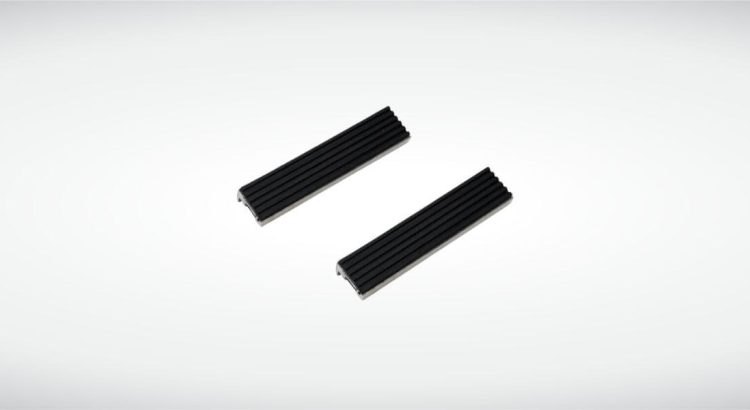
Protective vice jaws are simple accessories that have a direct impact on the quality and productivity of workshop work.
Their main function is to protect workpieces from contact with the metal jaws of a bench vice. They also help prevent marks, scratches and deformation that could compromise the final result.
In this article, discover what protective vice jaws are, what they are used for, when to use them and how to choose the right model for your vice.
What Are Protective Vice Jaws?
Protective vice jaws, also known as soft or jaw covers, are attachable pieces that fit over the original jaws of a bench vice.
They act as a buffer between the metal of the vice and the surface of the workpiece being clamped, such as an engine block.
They are made from materials that are softer than the steel used for the vice jaws, such as aluminium, rubber, plastic or nylon fibre, and can be fitted directly onto the jaws without tools.
What Are Protective Vice Jaws Used For?
The main purpose is to protect the workpiece during clamping.
When a machined metal component or a finished surface is clamped directly between steel jaws, there is a risk of leaving marks, scratches or even causing deformation.
Using protective jaws creates a softer contact surface and distributes the clamping force more evenly. This keeps the workpiece firmly and securely held without compromising its finish or integrity.
When Should You Use Protective Vice Jaws?
They are recommended whenever you are working with:
- Machined components with tight tolerances;
- Polished, anodised or treated surfaces;
- Aluminium, copper, brass or other softer materials;
- Plastic or composite components;
- Threaded components where direct clamping could damage the thread.
If the workpiece is made from raw steel and its final appearance is not important, the bare jaws may be sufficient. In all other cases, protective jaws should be the rule rather than the exception.

What Are The Different Types Of Vise Jaws?
They are mainly differentiated by material, with each option offering different characteristics:
1. Aluminium
These are among the most common options in professional mechanical workshops.
Aluminium is softer than the steel used for the vice jaws, while still being sufficiently rigid to hold the workpiece securely. It distributes pressure effectively without marking metal surfaces.
They are durable and easy to clean, making them a versatile option for general workshop use.
2. Rubber Or Soft Plastic
These provide greater protection for delicate surfaces, such as polished finishes, plastics or painted components.
They offer better grip than aluminium, helping to prevent the workpiece from slipping during operations. The disadvantage is that they wear more quickly and can easily retain dirt and other contaminants.
3. Nylon Fibre
This is an intermediate option between aluminium and rubber.
It offers good wear resistance and a lower risk of contamination from oils or metal chips.
Aluminium Or Rubber Vice Jaws: Which Should You Choose?
For metal components such as aluminium, copper, brass or machined steel, aluminium vice jaws are the right choice. They are rigid, durable and easy to maintain, while withstanding strong clamping forces without deforming. They also do not leave rubber residue on the workpiece.
For delicate finishes, such as polished, anodised or painted surfaces, or plastic components, rubber jaws provide greater surface protection. The additional grip is also advantageous when working with irregularly shaped or slippery components.
For a general-purpose workshop, aluminium jaws meet most requirements. For specific applications involving more delicate surfaces, it is worth keeping a second pair of rubber jaws available.
What Are The Advantages Of Aluminium Protective Vice Jaws?
Aluminium vice jaws are widely used in professional environments due to their:
- Durability: aluminium resists wear and retains its shape after thousands of uses;
- Easy maintenance: they do not absorb oils, metal chips or other contaminants and are easy to clean;
- Controlled rigidity: softer than steel, but sufficiently rigid to distribute clamping pressure effectively;
- Versatility: suitable for most metal materials without the risk of cross-contamination;
- Low replacement cost: affordable and easy to replace when they reach the end of their service life.

How To Choose Protective Vice Jaws For A Bench Vice?
Before purchasing, consider two main factors:
1. Vice Jaw Width
The first criterion to consider is compatibility with the width of the vice jaws. The protective jaws must fit correctly to ensure secure and stable clamping.
Before purchasing, measure the width of your vice jaws in millimetres and choose a model with the corresponding dimensions.
Common sizes include 100 mm, 125 mm and 150 mm.
2. Material Suitable For The Application
The material of the protective jaws should also be selected according to the intended application.
For general workshop tasks, aluminium jaws are a versatile and durable option. Rubber jaws, on the other hand, are particularly suitable for delicate workpieces or surfaces requiring greater protection against marks and scratches.
Which Protective Models Are Available In The Kroftools Catalogue?
KROFtools offers two models of aluminium protective vice jaws for bench vices, compatible with the main models in the range.
Set Of 2 Aluminium 125mm Protection Jaws For Bench Vises

Set of 2 aluminium protective vice jaws for bench vices with 125 mm jaws.
They fit directly onto the vice jaws without the need for tools and are suitable for KROFtools 125 mm bench vices, while being compatible with jaw widths between 100 and 200 mm.
Click on the image for more information about the Set Of 2 Aluminium 125mm Protection Jaws For Bench Vises (Ref. 8005).
Set Of 2 Aluminium 150mm Protection Jaws For Bench Vises

Set of 2 aluminium protective vice jaws for bench vices with 150 mm jaws.
They have the same features as the previous model but are designed for larger vices, including the KROFtools Fix Base Bench Vice (Ref. 239).
Click on the image for more information about the Set Of 2 Aluminium 150mm Protection Jaws For Bench Vises (Ref. 8007).
What Are The Most Common Mistakes When Using Protective Vice Jaws?
- Using the wrong size: if they do not fit the vice jaws precisely, they may come loose during operation, potentially causing accidents or damaging the workpiece;
- Failing to check their condition before use: worn or deformed protective jaws lose their protective effectiveness;
- Using dirty jaws or jaws containing metal chips: metal particles trapped on the surface can scratch the workpiece they are intended to protect;
- Overtightening rubber jaws: excessive deformation of the rubber can cause the workpiece to move during the operation.
How Should Protective Vice Jaws Be Maintained?
To extend the service life of protective vice jaws, clean them after each use with a dry or damp cloth to remove metal chips, oil and debris.
Once clean, store the jaws in a safe place, such as a tool case, to prevent – deformation caused by contact with metal vice jaws.
Regularly inspect the condition of the inner surfaces. When they show significant wear, deep scratches or deformation, replace the pair.
How Much Do They Cost?
The price varies depending on the size and material.
As a general rule, 125mm or 150mm protective vice jaws cost around a few dozen euros.
Where Can You Buy Them For Your Workshop?
To purchase KROFtools solutions, simply contact an authorised dealer of the brand.
Looking for more information about tools and workshop equipment? Follow us on Facebook and keep up with all the content we share every day.

