The “distribution” is one of the most important and sensitive systems in the operation of a combustion engine.
In short, this set ensures perfect synchronization between the crankshaft and the camshaft, allowing valves and pistons to work in perfect harmony and in sync.
When this synchronization fails, whether due to belt or chain breakage, or failure of tensioners, among others, serious damage can occur, such as contact between valves and pistons.
Understand in this article how to recognize signs of wear to avoid costly failures and protect engine integrity.
What Is a Distribution Kit?
The distribution kit is a set of components responsible for synchronizing the internal movement of the engine.
Normally, a kit includes timing belt, tensioners or bearings, and sometimes the water pump (depending on the engine). When one of these components fails, the entire engine synchronization system can be compromised.
What Is The Purpose Of Distribution In The Engine?
The main function of this set is to synchronize the internal components of the engine.
In summary, this system connects the crankshaft, which converts the movement of the pistons, and the camshaft, which controls the opening of the valves. If this synchronization fails, the valves can collide with the pistons, which in many cases causes severe engine damage.
For this reason, maintenance of the timing belt kit is considered one of the most important interventions in automotive mechanics.
How Long Does Distribution Last?
The durability of a distribution kit depends on several factors, such as engine type, driving conditions, and quality of components.
In most vehicles, replacement is recommended between 80.000km and 120.000km. However, some manufacturers indicate a limit between 5 and 7 years, even if the vehicle is driven little.
When Should Distribution Be Replaced?
Replacement should be done:
- When reaching the mileage recommended by the manufacturer;
- When there are signs of wear;
- After contamination by oil or fluids;
- Whenever there is intervention in the distribution area.
In the workshop, preventive maintenance during inspections can avoid bigger problems.
What Are The Signs Of a Worn Timing Belt?
A worn timing belt can show several visible or mechanical signs, the most common being:
- Cracks or wear on the belt;
- Abnormal noise coming from the distribution area;
- Engine running irregularly;
- Abnormal vibrations.
In some cases, the problem is only identified during disassembly, which is why many professionals prefer to follow the recommended replacement intervals.

How To Identify Problems In Distribution?
Problems in distribution are not always easy to detect at an early stage. In many cases, the first signs are subtle and may go unnoticed by the driver.
Although difficult, there are some symptoms that can indicate wear or imminent failure in the timing belt kit, such as:
1. Metallic Noises In The Distribution Area
One of the first signs of wear in this set is abnormal noises coming from the engine area, where the distribution system is located.
The sound is usually more evident when starting the engine or at lower RPMs.
As a general rule, these noises can arise due to:
- Worn tensioners;
- Bearings with play;
- Belt misalignment.
2. Abnormal Engine Vibrations
When there is wear in the distribution kit, the engine may start to show abnormal vibrations. This happens because the synchronization between components is no longer fully precise.
As a consequence, the following may occur:
- Idle vibrations;
- Irregular engine operation;
- Small rotation fluctuations.
These symptoms should be analyzed carefully, as they can also be associated with ignition failures or injection problems.
3. Difficulty Starting The Engine
When the belt begins to lose efficiency or when there is misalignment, the engine may have difficulty initiating the combustion cycle.
The most common symptoms include:
- Engine taking longer to start;
- Irregular start;
- Momentary failures after starting.
4. Loss Of Power While Driving
A distribution with an anomaly can directly affect engine performance.
If the synchronization between valves and pistons is not correct, the engine may lose efficiency, which can translate into:
- Loss of power;
- Slow throttle response;
- Increased fuel consumption.
5. Irregular Engine Operation
When the set shows advanced wear, the engine may start running irregularly and present symptoms such as:
- Unstable idle;
- Combustion failures;
- Abnormal noises from the engine.

How Much Does It Cost To Replace Distribution?
The price of a distribution can vary greatly depending on engine type and vehicle model. As a general rule, the total cost includes two parts: parts price and replacement labor.
The cost of the distribution kit is very high and depends on several factors. In more complex engines, this value can exceed thousands of euros.
In most cases, it is recommended to also replace the water pump, since access to the distribution system is already open. Therefore, you should also consider the value of this component.
What Tools Are Needed To Replace Distribution?
Replacing the timing belt requires specific tools to ensure correct alignment of the engine components.
In Stellantis group PureTech engines, there is a known weakness associated with premature timing belt wear, leading to an increased demand for specialized tools for this type of workshop intervention.
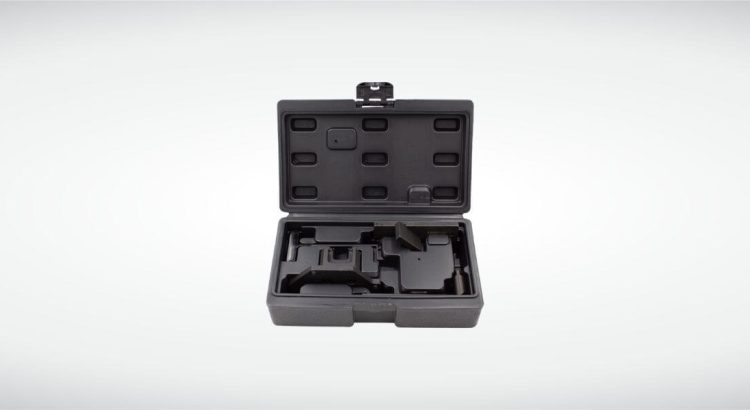
During replacement, it is necessary to lock and synchronize the crankshaft, camshaft, and distribution system. For this, engine synchronization kits are used, which allow proper positioning of the engine and precise alignment of components.
To facilitate this work in the workshop, distribution kits developed for specific engines exist, which increase safety and precision during maintenance.
Currently, in the KROFtools catalog, there are solutions for most car manufacturers, such as:
- Alfa Romeo;
- BMW;
- Citroen;
- Chrysler;
- Fiat;
- Ford;
- Honda;
- Hyundai;
- Kia;
- Land Rover;
- Mercedes;
- Opel;
- Peugeot;
- Renault;
- Toyota;
- Grupo VAG;
- Universal;
- Porsche;
- Volvo.
Among the most sought-after kits, the following stand out:
1. Timing Tool Bmw N47 / N47s / N57 2.0d

This tool, developed for BMW 2.0 diesel engines of the N47, N47S, and N57 families, allows proper locking and alignment of the distribution system components during interventions such as belt replacement or engine maintenance.
It is compatible with various BMW models from Series 1, 3, 4, and 5 equipped with these engines, ensuring precision in positioning the crankshaft and camshaft during repair.
Click on the image for more information about the Timing Tool Bmw N47 / N47s / N57 2.0d (ref. 1550).
2. Timing Tool Kit Jlr 2.0 Diesel Jaguar / Land Rover

This synchronization kit designed for Jaguar Land Rover 2.0 diesel engines includes precision tools that allow proper locking and synchronization of the distribution system during maintenance operations.
Click on the image for more information about the Timing Tool Kit Jlr 2.0 Diesel Jaguar / Land Rover (ref. 1693).
3. Engine Timing Check Kit 1.0 / 1.2 Gdi Puretech Psa

Developed for 1.0 and 1.2 GDI PureTech engines from the PSA group, this synchronization kit allows checking the wear or stretching of the timing belt and ensures correct locking of the crankshaft and camshaft during maintenance.
It is compatible with various Citroën, Peugeot, Toyota, and Opel models equipped with these engines, offering a precise and quick method to perform interventions in the distribution system.
Click on the image for more information about the Engine Timing Check Kit 1.0 / 1.2 Gdi Puretech Psa (ref. 1707).
Looking to learn more about the automotive world? Then follow us on Facebook and follow all the content we share daily.

