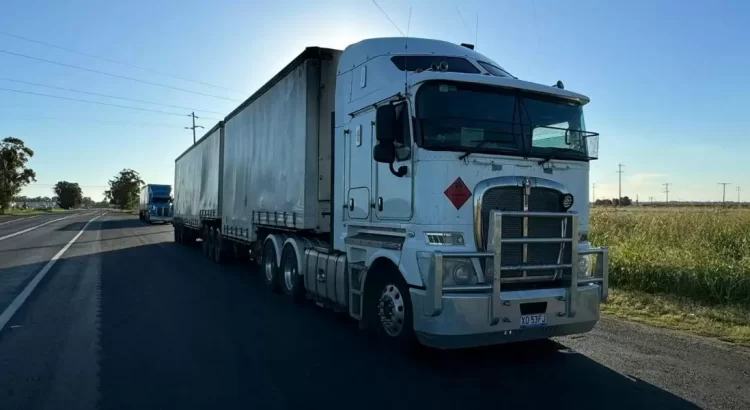
Driving a truck, a bus or any other heavy vehicle requires a heavy vehicle driving licence.
More than just a formality, this is a legal requirement without which it is not possible to drive on public roads or, for those wishing to work in the sector, to pursue a career as a professional driver.
Demand for this qualification has increased in recent years, partly due to the shortage of professional drivers across the European Union. Therefore, this may be an opportunity to start a new career.
To find out whether obtaining a heavy vehicle driving licence is worthwhile and to understand everything involved in this process, such as the Driver Certificate of Professional Competence (CPC) and Code 95, continue reading this article.
What is a Heavy Vehicle Driving Licence?
A heavy vehicle driving licence is the legal authorisation required to drive vehicles with a gross vehicle weight exceeding 3,500 kg.
The process of obtaining it is similar to that of a passenger car driving licence, meaning it includes theoretical training, practical training and assessment tests.
In addition, the licence is subject to a probationary period and a penalty points system, as is the case with category B licences.
What Is a Heavy Vehicle Driving Licence Used For?
In summary, a heavy vehicle driving licence authorises the driving of two major types of vehicles:
- Heavy goods vehicles (category C): trucks, freight transport vehicles, articulated combinations with trailers or semi-trailers;
- Passenger transport vehicles (category D): buses and collective transport vehicles with more than 8 seats, excluding the driver.
It is an essential qualification for anyone wishing to work in the road transport sector, in logistics companies, transport operators, bus companies or distribution fleets.
What Is The Difference Between Heavy Goods Vehicles And Passenger Transport Vehicles?
The two main heavy vehicle licence categories differ according to the type of vehicle and its purpose.
See the main differences in the table below.
| Heavy goods vehicles | Passenger transport vehicles | |
| Vehicle type | Trucks and freight vehicles | Buses and passenger transport vehicles |
| Capacity | Up to 8 passengers (in addition to cargo) | More than 8 passengers |
| Minimum age | 18 years (C1) | 21 years (D1) |
| Professional opportunities | Logistics, distribution and freight transport | Public transport and tourism |
Each major category includes specific subcategories, depending on vehicle weight and trailer combinations, which are detailed in the following section.
What Are The Heavy Vehicle Driving Licence Categories?
Generally speaking, heavy vehicle licences are divided into category C (heavy goods vehicles) and category D (passenger transport vehicles). Within each category there are several subcategories with different requirements and authorised vehicles.
1. Category C
- C1: authorises the driving of vehicles with a maximum authorised mass between 3,500 kg and 7,500 kg. It allows the transport of up to 8 passengers (excluding the driver) and towing a trailer with a maximum mass of less than 750 kg;
- C1E: authorises the driving of a vehicle combination consisting of a category C1 vehicle and a trailer or semi-trailer with a maximum mass exceeding 750 kg, provided that the total combination does not exceed 12 tonnes;
- C: authorises the driving of motor vehicles with a maximum authorised mass exceeding 3,500 kg. It also allows the transport of up to 8 passengers and towing a trailer with a maximum mass of 750 kg;
- C+E: authorises the driving of a combination consisting of a category C vehicle and a trailer or semi-trailer with a maximum mass exceeding 750 kg.
2. Category D
- D: authorises the driving of passenger transport vehicles with more than 8 passenger seats (excluding the driver). It allows towing a trailer with a maximum mass of 750 kg;
- D1: authorises the driving of vehicles with fewer than 16 passenger seats (excluding the driver) and a maximum length of 8 metres, with a trailer up to 750 kg;
- D1E: authorises the driving of combinations consisting of a category D1 vehicle and a trailer with a maximum mass exceeding 750 kg;
- DE: authorises the driving of combinations consisting of a category D vehicle and a trailer with a maximum mass exceeding 750 kg.

What Is The Minimum Age To Obtain a Heavy Vehicle Driving Licence?
As a general rule, it is possible to obtain a heavy vehicle driving licence from the age of 18. However, this depends on the category concerned.
For categories C, CE, D1 and D1E, the minimum age is generally 21 years. For categories D and DE, the minimum age is usually 24 years.
Is a Passenger Car Driving Licence Required To Obtain a Heavy Vehicle Driving Licence?
n practice, most driving schools require candidates to hold a category B licence, as access to several subcategories depends on previous qualifications.
For trailer categories (C1E, CE, D1E and DE), it is mandatory to already hold the corresponding base category: C1, C, D1 or D.
What Requirements Must Be Met To Obtain a Heavy Vehicle Driving Licence?
To obtain the legal authorisation to drive these vehicles, you must:
- Be resident in a Member State of the European Union;
- Meet the minimum age requirements for the relevant category and hold the required professional qualification certificate where applicable;
- Pass a medical examination proving physical, mental and psychological fitness;
- Not be subject to any driving ban;
- Pass both theoretical and practical tests.
What Documents Are Required To Obtain a Heavy Vehicle Driving Licence?
To obtain a heavy vehicle driving licence, you must enrol in a driving school and provide the following documents:
- National identity document or equivalent identification;
- Tax identification number, where applicable;
- Medical fitness certificate for driving;
- Psychological assessment;
- Valid driving licence, when applicable depending on the category requested.
The exact documents may vary depending on the driving school and category, therefore always confirm the requirements before proceeding.
What Is The Process For Obtaining a Heavy Vehicle Driving Licence?
The process follows the same general stages as a passenger car driving licence, but with more demanding training requirements.
In general, it works as follows:
- Enrol in a driving school authorised to provide heavy vehicle training;
- Attend the minimum required theoretical training hours, including common subjects and category-specific content;
- Pass the theoretical examination;
- Complete the minimum practical driving hours and required distance;
- Pass the practical examination;
- The competent authority issues the licence and records the new category on the driving licence.

How Long Does It Take To Obtain a Heavy Vehicle Driving Licence?
The duration depends on the candidate’s availability and compliance with the mandatory minimum training hours. There is no fixed timeframe, although minimum training requirements must be met.
The practical training minimums are generally as follows:
| Category | Driving hours | Distance covered |
| C1 | 12 | 120 |
| C | 16 | 200 |
| D1 | 14 | 180 |
| D | 18 | 240 |
| C1E and D1E | 8 | 100 |
| CE and DE | 10 | 120 |
The required hours and distance may be reduced for candidates who already hold certain licence categories.
How Much Does a Heavy Vehicle Driving Licence Cost?
The cost of obtaining a heavy vehicle driving licence varies depending on the driving school and country.
On average, the total cost usually amounts to several thousand euros. Additional fees may also apply for:
- Learning permits;
- Theoretical examinations;
- Practical examinations;
- Licence endorsements.
To obtain a more accurate estimate, request quotations from several driving schools.
CPC And Code 95: Are They Required To Work As a Professional Driver?
Holding a heavy vehicle driving licence alone is not sufficient to work professionally as a driver. To carry out this activity, you must also comply with the following requirements:
- CPC (Certificate of Professional Competence): mandatory training for those wishing to work as professional heavy vehicle drivers;
- Code 95: endorsement on the driving licence confirming the holder has completed the required professional training;
The CPC is valid for 5 years and must be renewed through 35 hours of periodic training.
Without a valid Code 95 endorsement, it is not legally possible to work as a professional driver in the European Union.
How Can a Heavy Vehicle Driving Licence Be Renewed?
The driving licence can usually be renewed either in person or online, depending on the procedures available in each Member State.
Generally, the following documents may be required:
- Current driving licence;
- Identification document;
- Medical certificate;
- Psychological assessment certificate, when applicable.
Candidates should always check the requirements with the competent authority in their country of residence.
Where Can You Obtain a Heavy Vehicle Driving Licence?
Not all driving schools are authorised to provide these categories, as they must have certified vehicles and qualified instructors.
Before enrolling, confirm that the driving school is officially authorised to provide training for the category you wish to obtain.
To find authorised training centres in your area, consult the competent transport authority in your country.
Looking to learn more about the automotive world? Follow us on Facebook and keep up to date with all the content we share every day.


Good job
Hello,
Thank you for your feedback. We are happy to help.
The KROFtools Team