The engine cooling system is responsible for keeping the engine temperature within safe operating limits. When it fails, the consequences can be serious and costly.
In this article, discover how this essential engine system works, what the main signs of failure are, and which tools are essential for diagnosis and maintenance in the workshop.
What Is The Engine Cooling System?
The cooling system is the set of components responsible for dissipating the heat generated by combustion and maintaining the engine at a stable operating temperature. Generally, this temperature ranges between 80°C and 105°C.
Without this system, the engine quickly overheats, which can lead to the deformation of components, the melting of internal parts and, in extreme cases, the complete destruction of the engine block.
What Are The Main Components Of The Cooling System?
As a general rule, the engine cooling system consists of:
- Radiator: dissipates the heat from the coolant through airflow;
- Water pump: keeps the coolant circulating throughout the entire circuit;
- Thermostat: regulates the temperature by controlling the flow of coolant to the radiator;
- Cooling fan: ensures radiator cooling when the vehicle is stationary or travelling at low speeds;
- Expansion tank: absorbs pressure variations and compensates for coolant expansion.
How Does The Engine Cooling System Work?
The system operates in a continuous cycle: the water pump circulates the coolant through the engine block, where it absorbs the heat generated by combustion. The heated coolant then flows to the radiator, located at the front of the vehicle, where airflow cools it down. Once cooled, it returns to the engine and the cycle starts again.
In this process, there are two components that regulate it: the thermostat, which controls when the coolant begins to circulate through the radiator (it only opens when the engine reaches operating temperature), and the cooling fan, which ensures the airflow required to cool the radiator when the vehicle is stationary or travelling at low speeds.

What Are The Types Of Engine Cooling Systems?
The three main automotive engine cooling systems are:
1. Liquid Cooling System
This is the most common system in modern vehicles. It uses a mixture of water and antifreeze to absorb and transfer heat from the engine.
It provides precise temperature control and is more efficient than air cooling.
2. Air Cooling System
Used in simpler engines, such as motorcycles, some industrial engines and older car models.
In this type of system, heat is dissipated directly through the fins on the engine block, without the use of coolant. It is simpler, but less efficient under extreme heat conditions.
3. Closed-Circuit Cooling System
This is a variation of the liquid cooling system, in which the circuit is completely sealed from the outside.
The coolant circulates in a sealed circuit, with an expansion tank that absorbs pressure and volume variations. It is the standard system in most modern vehicles.
Are There Differences In Diesel Engine Cooling Systems?
The operating principle is the same, but diesel engines generate more heat and require a more robust system.
In diesel vehicles, the cooling circuit is also connected to the turbocharger heat exchanger and, in many cases, to the EGR valve. This makes diagnosis more complex and increases the importance of using suitable testing tools.
What Are The Advantages Of The Engine Cooling System?
A cooling system in good condition improves vehicle performance and longevity because it:
- Protects the engine: keeps the temperature within safe limits and prevents engine overheating, which is one of the main causes of serious failures;
- Increases engine efficiency: an engine operating at the correct temperature consumes less fuel and produces more power than a cold or overheated engine;
- Extends component lifespan: thermal stability reduces wear on internal components such as pistons, gaskets, valves and bearings;
- Contributes to cabin comfort: the heat absorbed by the coolant is also what heats the passenger compartment during colder months through the heater core.
A neglected system has the opposite effect: it accelerates wear, increases fuel consumption and may lead to costly failures.

What Are The Signs Of a Failing Cooling System?
To avoid more serious failures, it is important to pay attention to signs of malfunction, such as:
- Engine overheating;
- Loss of coolant without any apparent cause;
- Sweet smell inside the cabin or under the bonnet;
- White smoke coming from the exhaust;
- Slow engine warm-up in winter;
- Presence of oil in the coolant or vice versa.
How Do I Know If The Engine Cooling System Is Working?
A diagnosis should be carried out whenever any signs of malfunction appear. Nevertheless, even without visible symptoms, a preventive inspection is recommended during every service.
If the vehicle is more than 4 years old or has covered more than 60,000 km, it is also recommended to diagnose the cooling system, as this is when the coolant starts to lose effectiveness and hoses may begin to show signs of wear.
Is It Worth Having Tools For The Engine Cooling System?
For an automotive maintenance and diagnostic workshop, yes. Having the right tools makes it possible to carry out the main interventions on the cooling system: pressure leak detection, diagnosis of compromised gaskets and coolant replacement.
Which Tools Are Essential For The Engine Cooling System?
The KROFtools catalogue includes professional equipment for the main interventions on the cooling system, from leak diagnosis to complete coolant replacement.
These are the three essential tools:
1. Refrigeration Tester 28pcs

Complete kit for pressure testing the cooling system, compatible with the Pump for Set 2514 (ref. 2514B).
This kit includes a manual pump with pressure gauge, charging hose, thermometer and 25 adapters covering a wide range of vehicles, from BMW and Mercedes-Benz to Volkswagen, Audi, Ford, Toyota, Honda and many other brands.
Click on the image above for more information about the Refrigeration Tester 28pcs (ref. 2514).
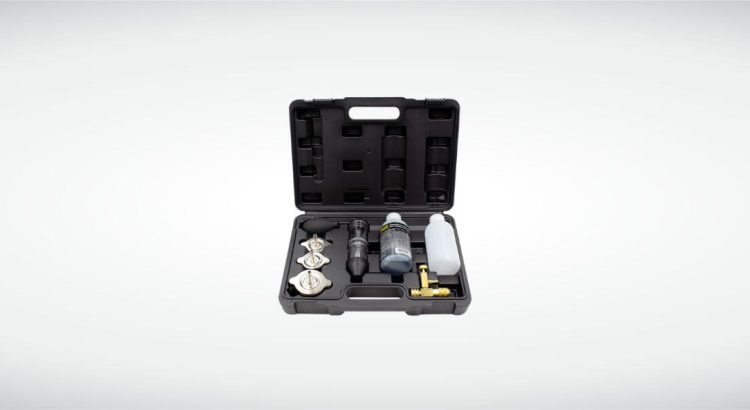
2. Combustion Gas Leak Detector Set

Identifies the presence of CO₂ in the coolant, a clear sign of a damaged cylinder head gasket or a crack in the engine block.
The test is quick and non-invasive: the specified fluid is introduced into the circuit, and any contamination by combustion gases causes an immediate colour change.
Click on the image above for more information about the Combustion Gas Leak Detector Set (ref. 4495).
3. Radiator Cooling System Exchange Machine

Professional equipment with a 7-inch colour LCD screen that autonomously performs circuit cleaning, refilling with new coolant, recovery of used coolant and extraction of coolant, while also alerting the user to low coolant levels.
It features two 20-litre tanks (new and used coolant), 2.3 m hoses and DC12V power supply.
Click on the image above for more information about the Radiator Cooling System Exchange Machine (ref. 9019).
Where Can I Buy Tools For The Engine Cooling System?
To purchase KROFtools tools and improve your workshop productivity, you should contact an authorised brand distributor.
Looking to learn more about workshop tools and automotive maintenance? Follow us on Facebook and keep up with all the content we share daily.

