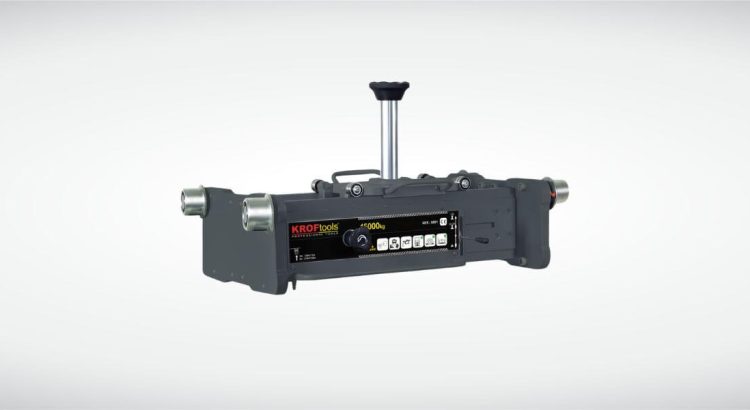
A pit jack is lifting equipment designed for automotive repair workshops that work with heavy-duty vehicles.
This equipment lifts the vehicle with stability and precision and allows the technician to work with full access to the underside of the vehicle, without restrictions of movement.
In this article, discover how this type of jack works, what advantages it offers compared to other lifting solutions, which model to choose, and how to use it safely.
What Is a Pit Jack?
A pit jack is lifting equipment designed to be used from an inspection pit in a workshop.
It is positioned underneath the vehicle and lifts it hydraulically, allowing the technician to work on components located on the underside of the vehicle, such as:
- Gearbox;
- Axles;
- Exhaust system;
- Suspension;
- Drivetrain.
Unlike a conventional floor jack, a pit jack operates at an adjustable height from the floor of the inspection pit, significantly improving ergonomics and safety during work.
How To Use a Pit Jack?
In short, it allows:
- Work on the exhaust system and axles;
- Maintenance of forklifts and other industrial equipment;
- Replacement or repair of the transmission and gearbox;
- Suspension and braking system work on heavy-duty vehicles.
What Is The Difference Between a Pit Jack And a Transmission Jack?
In short, a pit jack lifts the vehicle, while a transmission jack supports components during the repair. In most cases, these two pieces of equipment are used together.
Understand the differences between these models in the comparison table below.
| Pit Jack | Transmission Jack | |
| Positioning | Inspection pit | Workshop floor |
| Main function | Lift the complete vehicle | Support components |
| Capacity | 15T to 20T | 0.5T to 1T |
| Typical use | Heavy-duty vehicles | Light and heavy-duty vehicles |
Is It Worth Buying a Pit Jack?
For a workshop that regularly works with heavy-duty vehicles, yes.
A pit jack reduces the time required for each repair, improves the technician’s working conditions, and increases safety during lifting operations.

What Are The Main Advantages Of a Pit Jack?
Working with a pit jack offers clear advantages compared to other lifting solutions, such as:
1. Superior Stability
The wide base and hydraulic system distribute the vehicle’s weight evenly throughout the lifting operation.
Even with large and heavy vehicles, the equipment remains stable and free from movement throughout the lifting stroke.
2. Adjustable Height
The adjustable lifting stroke allows the vehicle to be positioned at the exact height required for each repair.
The technician controls both lifting and lowering progressively, without sudden movements, making it easier to work on different vehicle types and inspection pit depths.
3. Ergonomics
The technician works standing inside the inspection pit, with direct access to the underside of the vehicle, without having to bend, crawl, or work in uncomfortable positions.
This significantly reduces fatigue throughout the day and lowers the risk of musculoskeletal injuries associated with heavy-duty vehicle maintenance.
4. Versatility
A pit jack is compatible with a wide range of vehicles, including cars, vans, buses, trucks, and forklifts.
The adjustable width of the equipment, with or without wheels, allows it to be adapted to the available inspection pit space and the type of vehicle being serviced.
5. Speed
The pneumatic-hydraulic system lifts the vehicle within seconds, without physical effort from the operator.
In workshops with a high volume of repairs, this speed directly translates into greater productivity and reduced vehicle downtime.
6. Safety
The progressive lifting and lowering control eliminates sudden movements and reduces the risk of accidents during operation.
The reinforced structure and flow control valve ensure that the vehicle remains stable at any point throughout the lifting stroke, even in the event of air pressure loss.
What Pit Jack Models Are Available In The Kroftools Catalogue?
KROFtools offers three pneumatic-hydraulic pit jack models with different lifting capacities and lifting heights to meet various workshop requirements.
All models are designed to safely lift cars, buses, vans, trucks, and forklifts.
Discover the available models below.
1. 15t Jacking Beam – Height: 420-620mm
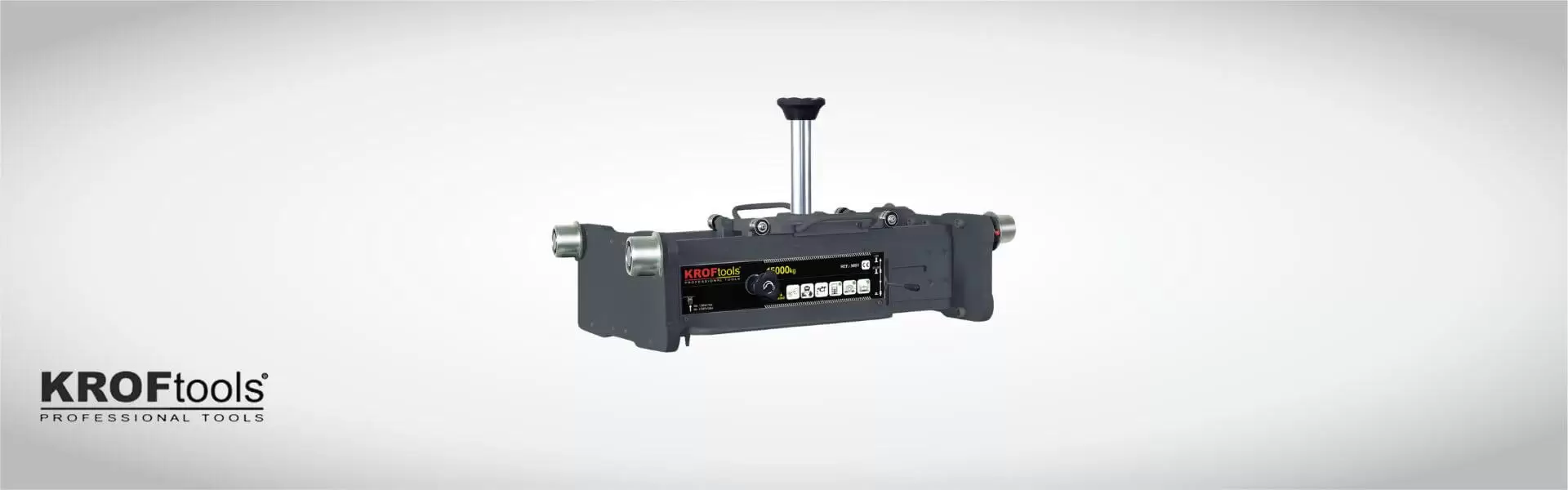
This model is designed for shallower inspection pits or vehicles with lower chassis.
With a 15-ton lifting capacity and a 200 mm lifting stroke (minimum height of 420 mm and maximum height of 620 mm), it is a compact solution for workshops that do not require a particularly high lifting range.
Click on the image for more information about the 15t Jacking Beam – Height: 420-620mm (ref. 9891).
2. 15t Jacking Beam – Height: 1020-1820mm

With an 800 mm lifting stroke and a maximum height of 1820 mm, this model is suitable for deeper inspection pits and repairs requiring the vehicle to be lifted to a considerable height.
Click on the image for more information about the 15t Jacking Beam – Height: 1020-1820mm (ref. 9892).
3. 20t Jacking Beam – Height: 576-996mm

The highest-capacity model in the range, with a 20-ton lifting capacity and a twin-piston system for faster and more efficient lifting.
The twin-piston design distributes force evenly, increasing stability when lifting heavier loads. It features a 420 mm lifting stroke and a maximum lifting height of 996 mm.
Click on the image for more information about the 20t Jacking Beam – Height: 576-996mm (ref. 9893).

How To Choose The Best Pit Jack?
The choice comes down to three criteria:
- Capacity: the maximum weight of the vehicles you intend to lift;
- Lifting stroke: the inspection pit depth and the required working height;
- Type of operation: if faster lifting is required, the twin-piston model is the best choice.
What Capacity Should a Pit Jack Have?
The ideal pit jack capacity depends on the type of vehicles your workshop services. As a general guide:
- 15 Tons: suitable for most medium heavy-duty vehicles, vans, and smaller trucks;
- 20 Tons: recommended for buses, heavy trucks, and any vehicle where an additional safety margin is critical.
Regarding lifting height, the short-stroke model (420–620 mm) is suitable for simpler tasks and shallower inspection pits. The long-stroke model (1020–1820 mm) provides greater freedom of movement during more complex repairs.
What Mistakes Should You Avoid When Buying a Pit Jack?
Before purchasing a pit jack, avoid the following mistakes:
- Ignoring the inspection pit depth: the equipment may not fit or may not provide sufficient lifting stroke;
- Underestimating the required capacity: operating at the equipment’s maximum limit compromises safety;
- Overlooking the air supply requirements: the jack may simply not operate in the workshop;
- Failing to confirm compatibility with the inspection pit dimensions: the equipment may not manoeuvre properly inside the pit.
How To Use a Jack Correctly?
To avoid workplace accidents when using a pit jack, you should:
- Check the condition of the equipment before each use: oil leaks, structural damage, or piston defects should be repaired before operation;
- Position the jack at the lifting points specified by the vehicle manufacturer;
- Ensure that the air pressure remains within the recommended range (0.75–1.2 MPa);
- Never exceed the maximum capacity of the model;
- Always use additional safety supports whenever the vehicle will remain lifted for an extended period, as the pit jack does not replace axle stands;
- Keep the working area clear during lifting operations.
What Is The Price Of a Pit Jack?
The price of a pit jack varies depending on its lifting capacity, lifting stroke, and construction type.
In general, this is professional workshop equipment, and prices can range up to several thousand euros.
Where Can You Buy a Pit Jack?
To purchase a KROFtools pit jack, you should contact an authorised KROFtools distributor.
Would you like to learn more about workshop equipment? Then follow us on Facebook and keep up with all the content we share every day.

