The engine cylinder is one of the most critical components of any internal combustion engine.
Inside it, combustion takes place, transforming fuel into movement. When it fails, the engine fails.
In this article, discover what an engine cylinder is, how it works, the most common problems and which tools can help diagnose them before it is too late.
What Is An Engine Cylinder?
The engine cylinder is a cylindrical chamber machined into the engine block. This is where the piston moves to compress the air-fuel mixture and receive the force generated by combustion.
An engine has several cylinders, with the most common configurations being 3, 4, 6 or 8 cylinders.
The cylinder-piston assembly largely determines the engine’s displacement, i.e. the total volume swept by the pistons across all cylinders.
The greater the displacement, the greater the amount of mixture burned per cycle and, consequently, the greater the available power.
What Is The Purpose Of An Engine Cylinder?
The cylinder acts as the piston’s working chamber, as the four stages of the combustion cycle take place inside it: intake, compression, expansion (combustion) and exhaust.
Without a cylinder in good condition, none of these stages can function correctly, reducing engine efficiency.
In addition to guiding the piston’s movement, the cylinder contributes to sealing the combustion chamber.
How Does An Engine Cylinder Work?
The engine cylinder operates according to the four-stroke cycle:
- Intake: the piston moves down and the intake valve opens. The cylinder fills with air (in diesel engines) or an air-fuel mixture (in petrol engines);
- Compression: the valve closes and the piston moves up, compressing the contents of the cylinder. Pressure can reach 10 to 20 bar in petrol engines and 35 to 50 bar in diesel engines;
- Expansion (combustion): the spark plug (petrol) or compression heat (diesel) ignites the mixture. The combustion forces the piston downwards, generating mechanical energy;
- Exhaust: the piston moves up again and the exhaust valve opens. The burnt gases leave the cylinder.
Does An Engine Cylinder Work The Same Way In a Petrol And Diesel Engine?
Embora o princípio seja o mesmo, existem diferenças importantes:
| Petrol Engine | Diesel Engine | |
| Ignition | Spark plug | Compression ignition |
| Compression pressure | 10 to 14 bar | 35 to 50 bar |
| Intake mixture | Air + fuel | Air only |
| Fuel injection | Port or direct injection | High-pressure direct injection |
| Common wear | Piston rings and cylinder walls | Greater thermal stress on the cylinder walls |
What Are The Main Problems With An Engine Cylinder?
The main signs of cylinder problems include:
1. Cylinder Wall Wear
The internal cylinder walls progressively wear due to friction with the piston rings.
When wear exceeds the permitted tolerances, sealing is compromised and compression decreases.
2. Cracking or Fracture
Thermal shock, engine overheating or excessive pressure can cause the cylinder walls to crack. This is a serious failure that is generally irreversible without machining or replacing the engine block.
3. Cylinder Head Warping
Excessive heat can deform the contact surface between the engine block and cylinder head, causing gas or coolant leaks into the cylinder.
4. Head Gasket Failure
The gasket between the engine block and cylinder head seals the combustion chamber. When it fails, coolant can enter the cylinder, causing a serious problem that may be indicated by white smoke from the exhaust.
5. Piston Ring Wear
The piston rings ensure a seal between the piston and cylinder walls. When they become worn, engine oil enters the combustion chamber, causing blue smoke from the exhaust and increased oil consumption.
How Do I Know If My Engine Cylinder Is Bad?
The engine can give warning signs before the problem becomes more serious. Therefore, look out for symptoms such as:
- Progressive loss of power, especially during acceleration;
- Increased oil consumption without any visible leak;
- Blue smoke from the exhaust;
- White smoke from the exhaust;
- Difficult starting, especially when cold;
- Irregular engine operation or misfires;
- Engine temperature rising above normal.
How To Perform An Engine Compression Test?
A compression test measures the pressure generated in each engine cylinder during the compression stroke.
To perform the test:
1.Warm the engine up to its normal operating temperature;
2.Remove all spark plugs (petrol) or injectors (diesel);
3.Connect the pressure gauge to the opening of the first cylinder;
4.Crank the engine (without starting it) for a few seconds;
5.Record the maximum pressure reached;
6.Repeat the process for all cylinders.
What Are The Signs Of a Bad Cylinder?
During this diagnostic procedure, if you find:
- Pressure below the minimum value specified by the manufacturer: there may be worn piston rings or valves;
- A difference of more than 10% between cylinders: possible engine cylinder problem;
- Very low pressure: possible fracture or head gasket failure.

How To Perform a Cylinder Leak-Down Test?
A leak-down test measures pressure and identifies the source of a leak by introducing compressed air into the cylinder with the piston at top dead centre (TDC), while measuring the percentage of air escaping.
Each reaction indicates a potential problem. Therefore, a leak detected at the:
- Intake manifold: indicates a damaged intake valve;
- Exhaust manifold: indicates a damaged exhaust valve;
- Crankcase: indicates worn piston rings;
- Cooling system expansion tank: indicates a compromised head gasket.
Can a Damaged Engine Cylinder Be Repaired?
It depends on the type and extent of the damage. As a general rule:
- Light cylinder wall wear: can be corrected through machining (boring and honing the cylinder walls) and fitting oversized pistons;
- Minor cracking: in some cases, it can be repaired using specialised welding or high-temperature epoxy compounds;
- Deep cracking or fracture: requires replacement of the engine block. In high-mileage vehicles, this may not be economically worthwhile;
- Cylinder head warping: the contact surface can be machined if the warping is not excessive. Alternatively, the cylinder head may need to be replaced.

How To Prevent Engine Cylinder Problems?
Preventive maintenance is the best way to extend the service life of engine cylinders. Therefore:
- Follow the recommended engine oil replacement intervals;
- Monitor the engine temperature;
- Regularly check the level and condition of the coolant;
- Carry out periodic diagnostics at a workshop and repair faults immediately.
How Much Does It Cost To Fix An Engine Cylinder?
The price of a cylinder varies depending on the make, model and whether it is a new, reconditioned or machined component.
As a general rule, machining an existing cylinder costs several hundred euros. Installing a reconditioned engine block can cost anywhere from several hundred to several thousand euros, depending on the make and engine displacement.
If you choose to replace it with a new engine block, the cost can exceed several thousand euros.
Which Tools Can Help Diagnose Engine Cylinder Problems?
The KROFtools catalogue includes the essential tools for diagnosing and working on engine cylinders, from compression testing to piston installation.
Discover the available options below.
Engine Cylinder Component Organizer

Helps keep all engine components in the correct order, including valves, camshafts and all other related engine components.
Click on the image for more information about the Engine Cylinder Component Organizer (ref. 1748).
Petrol / Diesel Engine Compression And Lekage Test Kit

Pressure and compression testing up to 50 bar (725 PSI), suitable for most petrol engines and modern HDi, TDCi, unit injector and older diesel engines.
Click on the image for more information about the Petrol / Diesel Engine Compression And Lekage Test Kit (ref. 8106).
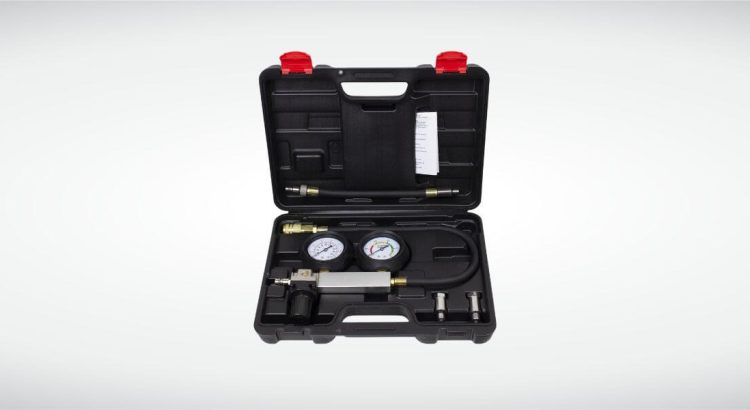
Cylinder Leakage Tester

Allows you to check cylinder sealing using a leak detection unit with two 0–100 psi (0–7 bar) pressure gauges.
Click on the image for more information about the Cylinder Leakage Tester (ref. 8110).
Cylinder Hones
After machining a cylinder, it is necessary to recreate the correct surface finish on the cylinder walls to ensure that the new piston rings seat correctly.
The KROFtools catalogue includes a complete range of cylinder hones for different cylinder diameters:
- Brake Cylinder Hone 19-69mm (ref. 7014);
- Engine Cylinder Hone 32-89mm (Ref. 7015);
- Engine Cylinder Hone 50-178mm (Ref. 7020);
- Engine Cylinder Hone 89-370mm (Ref. 7025);
- Engine Cylinder Hone 51-250mm (ref. 7030).
Where To Buy Engine Cylinder Tools?
All the tools mentioned above are available from authorised KROFtools dealers across Europe. Availability, requirements and applicable regulations may vary by country, so check the legislation and requirements applicable in your country.
Looking to learn more about the automotive world? Follow us on Facebook and keep up with all the content we share every day.

